

I’m about to be on holiday for a week, so this edition of Pinks is a round-up of reading to keep you out of mischief until mid-August.

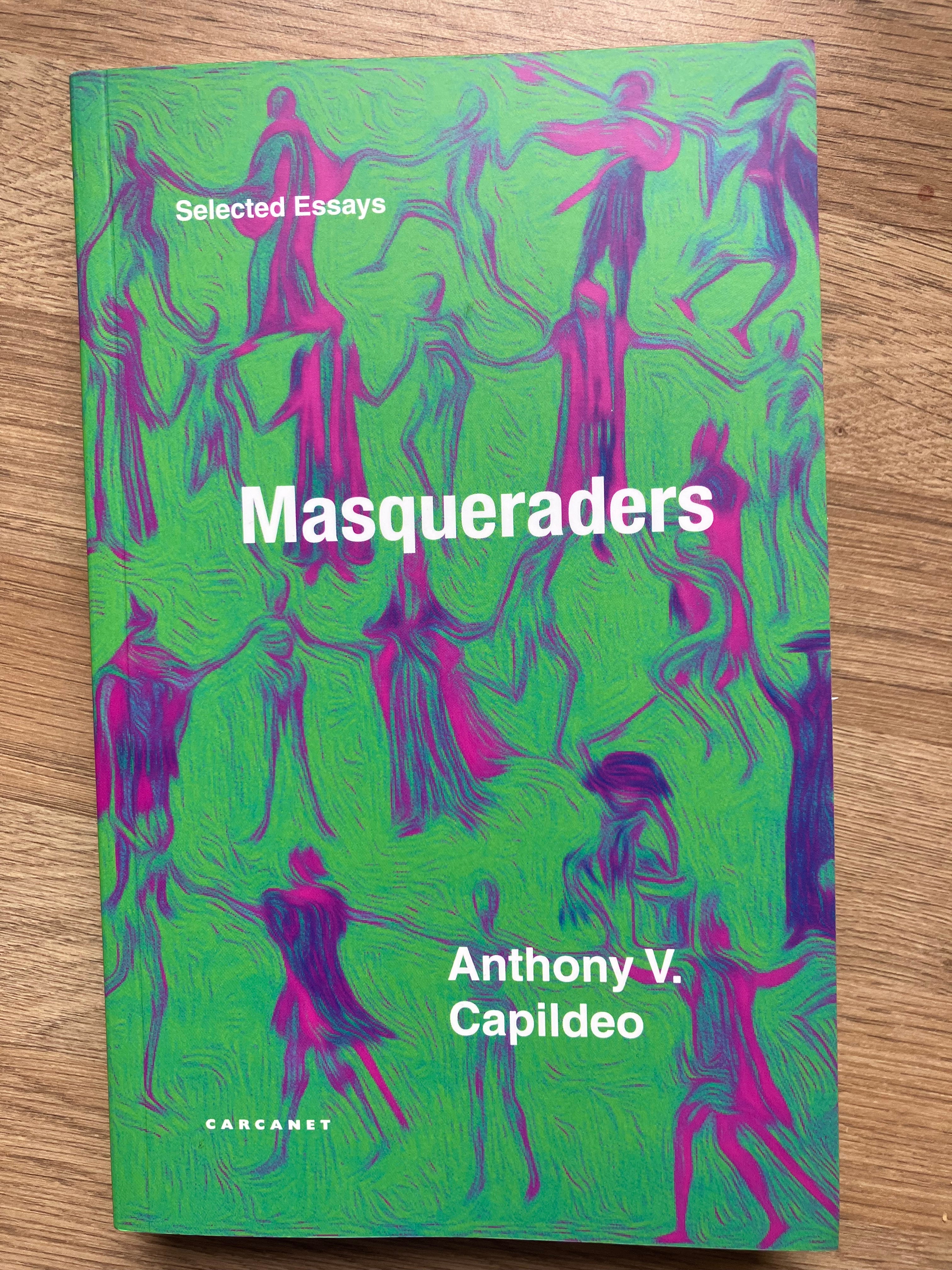
Last year, in the post above, I wrote about my admiration for the essays of one of my favourite poets, Anthony Vahni Capildeo. They have been appearing regularly in PN Review for many years, and now a selection has been published by Carcanet: Masqueraders. You can read the opening of the first piece below, which will take you to Christmas in Trinidad, where “the wet-bright December sky thickens alcoholically, like ponche de crême”:


Also in PN Review this month is a short obituary notice that I contributed in memory of the poet J.H. Prynne, who died in April (the post above is what I wrote at the time):
J.H. Prynne, who died on 22nd April at the age of 89, was a poet and teacher who excluded the author’s personality as a relevant consideration in the reading of literature and simultaneously became one of the most talked-about people in modern British poetry.
No doubt it was partly his personal elusiveness in the verse published under his name that heightened interest in traveller’s tales about his character, which became entirely believable to anyone who ever met this inimitably sharp, energetic and high-spirited man. It was said he had been in a Polish tank regiment for National Service and could pass in Eastern Europe for a German communist; that he could be a maddening companion on country walks, lingering with a magnifying glass over a blade of grass; that he always wore the same outfit of a white shirt, black jacket and orange tie, with the concession of a short-sleeved shirt in summer; that he was both a good cook and mechanic; that he worked through the night in his rooms at Gonville and Caius College, Cambridge, and could often be found at parties, holding forth and “blowing your mind”; that he had an aversion to being photographed and kept his office phone in a drawer; that he was famous in China.
My own story illustrates what one of his poems calls “a pure joy at a feeble joke”, although it was not really so feeble. I was newly arrived in Cambridge to begin a PhD, and he kindly invited me to afternoon tea. We got onto the subject of the University Library, and he recalled hearing about a volume of Heidegger that had been thrown from a high window onto the roof below. It was an apt fate, he felt, for a philosopher who had coined a term for the conditions of existence over which an individual life has no choice: “Geworfenheit’”, or “thrownness”.
Remembering this now not only makes me think how his poetry was fascinated by the material conditions of our lives — his first book, never reprinted, was called Force of Circumstance (1962); his next, Kitchen Poems (1968) — but also how his power to pursue a single-minded course, in life and verse, seemed to throw off the limits of thrownness. A long-time friend once remarked that Prynne’s polymathic intellect meant he might equally have been a linguist or a scientist. But he set himself to be a poet and pursued that contrary path as a way of expressing his belief in the dialectical nature of truth. As he wrote in 2010:
To be in and across all things a poet, in daily involvement with the dialectic of imagination and real things, has been a task giving the profoundest joy and fulfilment. The task in this work has been to maintain the fundamental argument of contradiction, even while opening one’s powers of feeling and knowledge to the largest extent, so that language occupies the entire space of the poet’s self-being and then overflows it.
Contrarily enough, having avoided autobiography for so many years, in 2016 he gave a long interview to the Paris Review, of which the full (unpublished) transcript comprises 152,000 words, or 495 printed pages. The published version provides ample evidence of his ability to speak extempore in eloquently complex sentences. The same year, the flow of poetry suddenly became a flood. The third edition of his Poems covered the period 1968–2014 in almost 700 pages; it was supplemented by a volume of even greater length, Poems 2016—2024. After that, he published Front Obsidian Cobalt (2024), Doric Plumage (2025), Which Scarf Match and Single Tangle Mine (both 2026). His work appeared almost entirely through small presses, making individual collections now hard to find, or afford, but there have been two new paperback editions of earlier books: The White Stones (1969) and The Oval Window (1983). A collection of his critical prose in two volumes, long wished for by readers, is forthcoming. As well as his essays and commentaries on poetry, it will hopefully include “Mr Prynne’s Notes and Materials for English Students”, a legendary collection of reading lists, lecture notes and generous wisdom (“tips”) accumulated over more than forty years of teaching Cambridge undergraduates.
You can browse Mr Prynne’s tips here:
https://web.archive.org/web/20190915221141/https://www.cai.cam.ac.uk/documents/jhp13

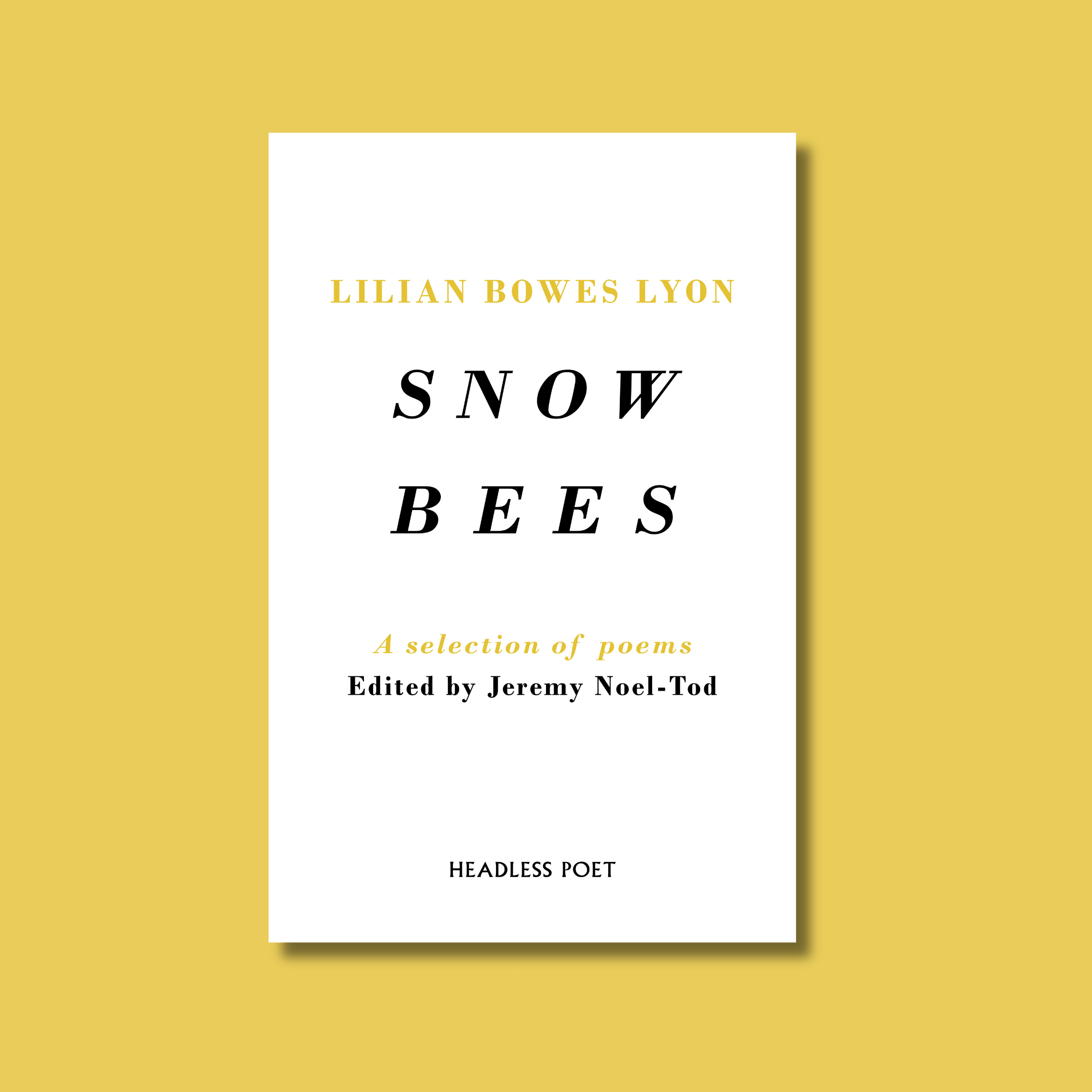
While I’m away this week, I’m happy to know that a project which began as a Some Flowers Soon post two years ago (above) is being printed and posted in the form of a beautiful pamphlet, thanks to Jem Wikeley of the excellent Headless Poet press. You can read a poem from Snow Bees, my selection of Lilian Bowes Lyon’s poetry, here:

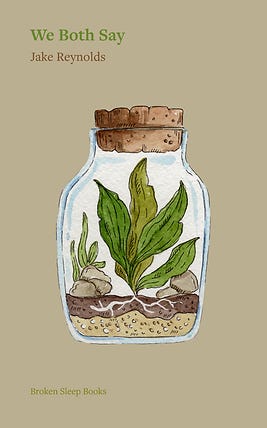
Something else that I’ve already recommended as holiday reading — in a way — is Jake Reynolds’ debut pamphlet, We Both Say (Broken Sleep Books). Here’s what I said:
Sweet, dry, full of imaginary catastrophes and very funny, it reminds me of Frank O’Hara’s observation that “when I get lofty enough I’ve stopped thinking and that’s when refreshment arrives”. Filled with a beautifully fluent music of observation, this is a book to take on a plane even if you aren't catching a plane: “earbuds and silk mask ready / juice in the chargeables”.
I had the pleasure of teaching Jake as a Poetry student at the University of East Anglia. But you don’t just have to take his PhD supervisor’s word for it: We Both Say has just been announced as the Poetry Book Society’s Autumn 2026 Pamphlet Choice. You can buy it (and other good things) in the Broken Sleep Summer Sale here: https://www.brokensleepbooks.com/product-page/jake-reynolds-we-both-say
Finally, there’s a new open-access journal that I haven’t had a chance to read yet, but which contains new poems by Capildeo and Prynne, and much more: The Hythe Review.
https://thehythereview.co.uk/issue/1944/info/
Some Flowers Soon will resume Augustly.
Looking at Mr Prynne's tips, I think I am VERY glad I was not presented with anything like that when I started my degree in English!
Enjoy the break.