
Zip! Zoop!
On Cook Ting and "Cook Ting"

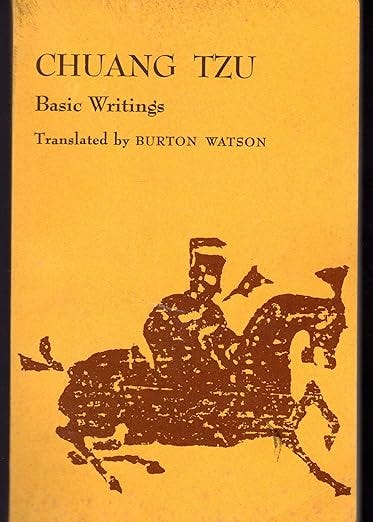
My post this week is a note on the relationship between a poem and its sources, which follows on from some reading you can find on two links. The first is R.F. Langley reciting his poem “Cook Ting” on the Poetry Archive website:
https://poetryarchive.org/poem/cook-ting/
The second is my discussion of “Cook Ting”, as published this week on Poetry Daily:
https://poems.com/features/what-sparks-poetry/jeremy-noel-tod-on-r-f-langley/
I’m very grateful to Vivek Narayanan, editor of Poetry Daily, for the invitation to write about a poem and its “spark”. I’ve always found “Cook Ting” works like a charm when introducing students to contemporary poetry that doesn’t immediately make sense in the way they expect. Its emphatic rhyming and collaged imagery encourages them to curiosity about what it’s doing, which then leads into a discussion of the connections we make as readers, encouraged by the leaps of rhyme — and then finally we look more closely at one or more of the sources that Langley used when writing the poem.
In the notes to my edition of Langley’s Complete Poems (2015), I listed the reading that inspired each poem, as recorded in his notebook. Here is the entry for “Cook Ting”:
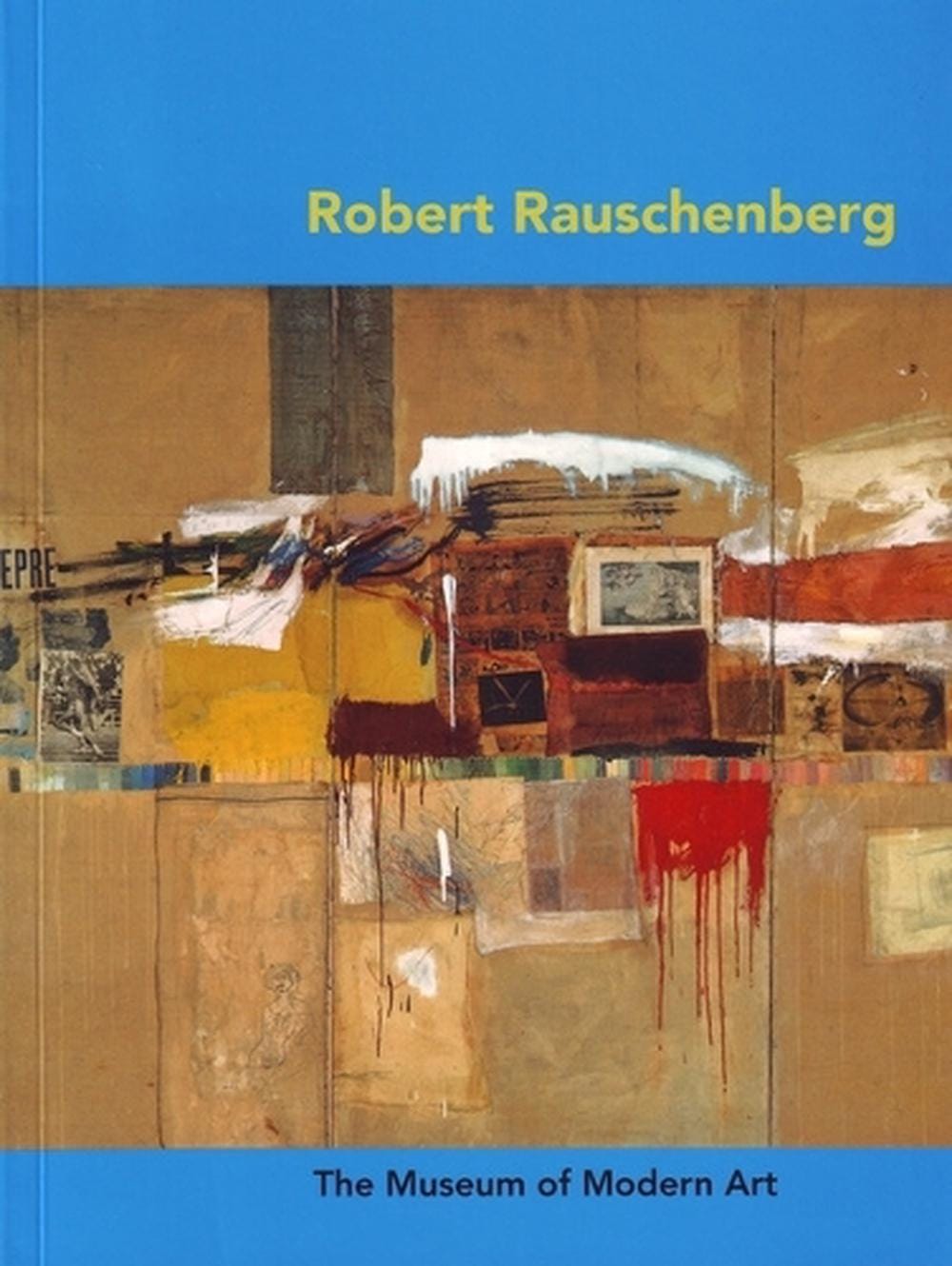
![Cook Ting First published as 'Rauschenberg' in April Eye: Poems for Peter Riley (infernal methods, 2000). Cage, John, 'On Robert Rauschenberg, Artist, and His Work', in Silence (1968). Chuang Tzu, Basic Writings, trans. Burton Watson (1964), Section 3, 'The Secret of Caring for Life'. Cocker, Mark, 'Trouble in the air as pirates go raiding in Sizewell's shadow', Guardian, 4 Feb 2000. Rauschenberg, Robert, 'Untitled (Scatole Personali series), c. 1952 / Assemblage: lidded painted wood box with twig and beetle / 1 1/2 x 3 x 2 1/8 in. (closed) / Collection of the artist, New York', in Hopps, W., Robert Rauschenberg: The Early 1950s (1991). Rauschenberg, Robert, 'Fulton Street studio view, artist's domestic alcove, c. 1953' including 'Untitled [paper sculpture], c. 1953 / Hanging assemblage: balsa wood, paper, and twine / c. 20 x 40 x 15 in. / Lost or destroyed', in Hopps, W., Robert Rauschenberg: The Early 1950s (1991)](https://substackcdn.com/image/fetch/$s_!tWye!,f_auto,q_auto:good,fl_progressive:steep/https%3A%2F%2Fsubstack-post-media.s3.amazonaws.com%2Fpublic%2Fimages%2F8f2dfbad-771d-4d09-9055-a119a3f4e47b_996x560.png "Cook Ting First published as 'Rauschenberg' in April Eye: Poems for Peter Riley (infernal methods, 2000). Cage, John, 'On Robert Rauschenberg, Artist, and His Work', in Silence (1968). Chuang Tzu, Basic Writings, trans. Burton Watson (1964), Section 3, 'The Secret of Caring for Life'. Cocker, Mark, 'Trouble in the air as pirates go raiding in Sizewell's shadow', Guardian, 4 Feb 2000. Rauschenberg, Robert, 'Untitled (Scatole Personali series), c. 1952 / Assemblage: lidded painted wood box with twig and beetle / 1 1/2 x 3 x 2 1/8 in. (closed) / Collection of the artist, New York', in Hopps, W., Robert Rauschenberg: The Early 1950s (1991). Rauschenberg, Robert, 'Fulton Street studio view, artist's domestic alcove, c. 1953' including 'Untitled [paper sculpture], c. 1953 / Hanging assemblage: balsa wood, paper, and twine / c. 20 x 40 x 15 in. / Lost or destroyed', in Hopps, W., Robert Rauschenberg: The Early 1950s (1991)")
In the Poetry Daily piece I concentrate on the poem’s use of phrases from Cage’s essay on Rauschenberg (as you can see, “Cook Ting” was originally called “Rauschenberg”). But Langley also copied out other observations from Cage which inform the poem’s thinking about what art does to the world in a more general way. Here are three:
Beauty is now underfoot wherever we take the trouble to look.
*
[Rauschenberg] is not saying; he is painting […] The message is conveyed by dirt which, mixed with adhesive, sticks to itself and to the canvas upon which he places it. Crumbling and responding to changes in the weather, the dirt unceasingly does my thinking.
*
Each thing that is there is a subject. It is a situation involving multiplicity. (It is no reflection on the weather that such and such a government sent a note to another.)
I’m struck in particular by the mention of “weather” here twice as an aspect of reality which is not human, not social or political, and yet as changeable and contingent as thought itself. The inclusion of the natural world in the poem — through Mark Cocker’s nature diary for the Guardian newspaper about seabirds feeding near the Sizewell nuclear reactor — is also “a situation involving multiplicity”. The only direct evocation of Cocker’s diary in “Cook Ting” is the sentence “The gulls are a / white flap over sprats in the foam”. But the whole piece describes a more complex ecosystem of gulls, long-necked divers and marine skuas — the latter being “highly opportunistic” birds who feed through kleptoparasitism, or piracy; that is, they wait for other birds to catch a fish, and then harass it until the fish is disgorged.
What strikes me about reading Cocker’s seabirds back into the lines of “Cook Ting” is how the “sources” of a poem are much more than the choice words that a poet (like a piratic seabird) plucks from the mouth of another writer. The two pieces of writing fall into conversation with each other, suggesting further analogies between the behaviour of birds and the imagination. “The birds were so densely grouped […] they appeared to be one vast amoebic organism”, writes Cocker; “Call it an episode when they / tumble together to make it / one”, echoes “Cook Ting”; “a / blade is so sharp it can dance round / the joint”, says “Cook Ting”; “a skua’s loose-winged movements are a compelling blend of grace and menace”, echoes Cocker. As Langley once wrote to me in a letter about his habit of noting down his reading:
I might even feel that [the passages] are as interesting as the poem itself. They have authority, reach beyond what I did with them. […] None of it means I personally subscribe to the points of view quoted, of course, merely that I am entertaining them, finding that fruitful.
This sense of playful respect for the “authority” and “reach” of his sources suggests why Langley’s overarching analogy for the figure of the poet is Cook Ting himself: the master butcher who knows how to “care for life” by slicing between the invisible “openings” in a carcass, rather than hacking across the integrity of its organic structure. So to end this reflection on what happens when you read a poem’s sources whole alongside the poem itself, here is Burton Watson’s translation of that parable from Chuang Tzu: The Basic Writings (1964), as copied out in Langley’s notebook:
Cook Ting was cutting up an ox for Lord Wen-hui. As every touch of his hand, every heave of his shoulder, every move of his feet, every thrust of his knee — zip! zoop! He slithered the knife along with a zing, and all was in perfect rhythm, as though he were performing the dance of the Mulberry Grove or keeping time to the Ching-shou music.
“Ah, this is marvelous!” said Lord Wen-hui. “Imagine skill reaching such heights!”
Cook Ting laid down his knife and replied, “What I care about is the Way, which goes beyond skill. When I first began cutting up oxen, all I could see was the ox itself. After three years I no longer saw the whole ox. And now — now I go at it by spirit and don’t look with my eyes. Perception and understanding have come to a stop and spirit moves where it wants. I go along with the natural makeup, strike in the big hollows, guide the knife through the big openings, and following things as they are. So I never touch the smallest ligament or tendon, much less a main joint.
“A good cook changes his knife once a year — because he cuts. A mediocre cook changes his knife once a month — because he hacks. I’ve had this knife of mine for nineteen years and I’ve cut up thousands of oxen with it, and yet the blade is as good as though it had just come from the grindstone. There are spaces between the joints, and the blade of the knife has really no thickness. If you insert what has no thickness into such spaces, then there’s plenty of room — more than enough for the blade to play about it. That’s why after nineteen years the blade of my knife is still as good as when it first came from the grindstone.
“However, whenever I come to a complicated place, I size up the difficulties, tell myself to watch out and be careful, keep my eyes on what I’m doing, work very slowly, and move the knife with the greatest subtlety, until — flop! the whole thing comes apart like a clod of earth crumbling to the ground. I stand there holding the knife and look all around me, completely satisfied and reluctant to move on, and then I wipe off the knife and put it away.”
“Excellent!” said Lord Wen-hui. “I have heard the words of Cook Ting and learned how to care for life!”
NOTES
You can see Rauschenberg’s beetle and stick in a box here:
Untitled (Scatole Personali) | Robert Rauschenberg Foundation
I wrote more about Langley’s poetry here:

and here:

As always, your selection has me in raptures. I'm so excited by the line, "Take hold of a word and turn it on." Haha, it's an illuminating insight!